
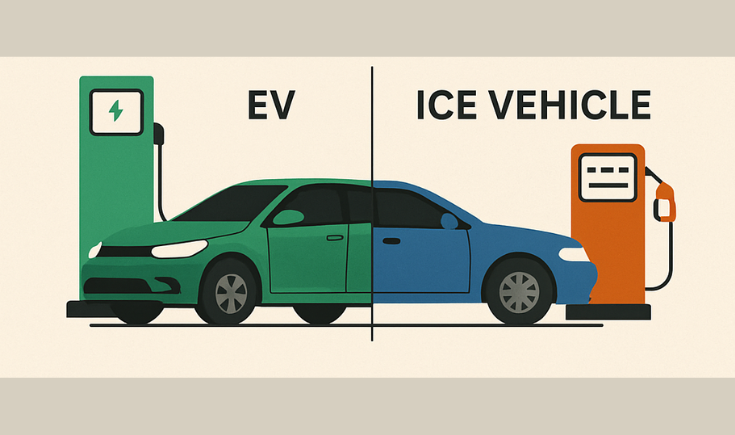
The buzz around electric vehicles (EVs) has taken over streets, showrooms, and headlines. With rising fuel prices, growing environmental awareness, and government subsidies, EVs are becoming an attractive option for many Indian consumers. But the big question remains Is an EV truly cheaper in the long run? At Hassonjee Automotives, Amravati, we believe in empowering our customers with clear, practical insights. Let’s dive into the real cost comparison between electric vehicles and traditional internal combustion engine (ICE) vehicles.
1. Initial Purchase Price: EVs vs ICE Vehicles
The upfront cost of EVs tends to be higher. For instance, an electric hatchback can cost ₹2–₹4 lakhs more than its petrol or diesel counterpart. This price gap is mainly due to the expensive lithium-ion batteries that power EVs.However, central and state government subsidies significantly reduce the initial burden. Under the FAME II scheme and Maharashtra’s EV policy, buyers can avail benefits of up to ₹1.5 lakhs. This makes the price difference less daunting for consumers in Amravati and other parts of Maharashtra.
2. Running Costs: Charging vs Fuel
Here’s where EVs truly shine. The average cost of running a petrol vehicle is around ₹6–₹8 per kilometre, depending on fuel efficiency and local fuel rates. In contrast, an electric vehicle typically costs only ₹1–₹1.5 per kilometre when charged at home. For instance, if you drive approximately 1,000 kilometres a month, a petrol car would cost you about ₹7,000, whereas an EV would cost only ₹1,500. That’s a monthly saving of ₹5,500, or ₹66,000 annually just in running costs. Over a five-year period, you could save more than ₹3.3 lakhs. At Hassonjee Automotives, we offer professional EV charging consultation and assist in setting up reliable at-home or commercial EV charging stations in Amravati, ensuring your switch to electric is smooth and future-ready.
3. Maintenance Costs: Lower for EVs
EVs are simpler machines. With no engine oil, fewer moving parts, and no clutch, their servicing is more straightforward and less frequent. A conventional car requires regular oil changes, filter replacements, and periodic engine maintenance, often costing ₹8,000–₹12,000 annually.In comparison, EVs generally need only brake servicing, tyre checks, and occasional software updates, which cost 40–60% less annually.At Hassonjee Automotives, our team is equipped to service and maintain electric vehicles with precision, using diagnostic tools tailored for the new-age mobility era.
4. Battery Replacement: The EV Wildcard
The battery is the heart of any EV and also its most expensive component, with replacement costs ranging between ₹3 to ₹6 lakhs depending on the model. However, there’s good news. Modern EV batteries now come with warranties of up to 8 years or 160,000 km, offering peace of mind to buyers. Additionally, battery degradation has proven to be slower than initially feared, meaning most users won’t need a replacement within the first 7 to 10 years. With advancements in battery recycling and second-life solutions also underway, future replacement costs are expected to reduce even further, making EV ownership more economical in the long run.
5. Government Incentives & Tax Benefits
Apart from purchase subsidies, EV buyers in Maharashtra enjoy several additional financial benefits that make the switch to electric even more appealing. These include road tax exemptions, registration fee waivers, and income tax deductions under Section 80EEB for loans taken to purchase an electric vehicle allowing up to ₹1.5 lakh deduction on the interest paid. Together, these incentives significantly reduce the total cost of ownership, positioning EVs as a smart and financially sound long-term investment.
Frequently Asked Questions (FAQs)
Q1: What are the current government subsidies for EVs in Maharashtra, specifically for Amravati residents?
A1: Under the FAME II scheme and Maharashtra's EV policy, buyers can avail significant benefits, often up to ₹1.5 lakhs on the purchase of an EV. Additionally, residents of Amravati (and throughout Maharashtra) benefit from 100% road tax exemptions and no registration fees for EVs. Hassonjee Automotives can help you understand and claim all applicable subsidies.
Q2: How much can I really save on fuel costs by switching to an EV in Amravati?
A2: Substantial savings are possible! While petrol costs around ₹6-₹8 per km, an EV typically costs ₹1-₹1.5 per km when charged at home. For someone driving 1,000 km a month, that's a saving of approximately ₹5,500 monthly, or ₹66,000 annually. Over five years, you could save over ₹3.3 lakhs on fuel alone.
Q3: What's the truth about EV battery life and replacement costs?
A3: Modern EV batteries are built to last, typically coming with warranties of 8 years or up to 160,000 km. Most users won't need a battery replacement within the first 7-10 years. While a replacement can be expensive (₹3-₹6 lakhs), prices are declining, and recycling/second-life solutions are emerging, making future costs more manageable.
Q4: Can I get any income tax benefits for buying an EV in India?
A4: Yes! Under Section 80EEB of the Income Tax Act, you can claim deductions on the interest paid on a loan taken for the purchase of an electric vehicle, up to ₹1.5 lakh. This is a significant financial incentive that further reduces your overall ownership cost.
