
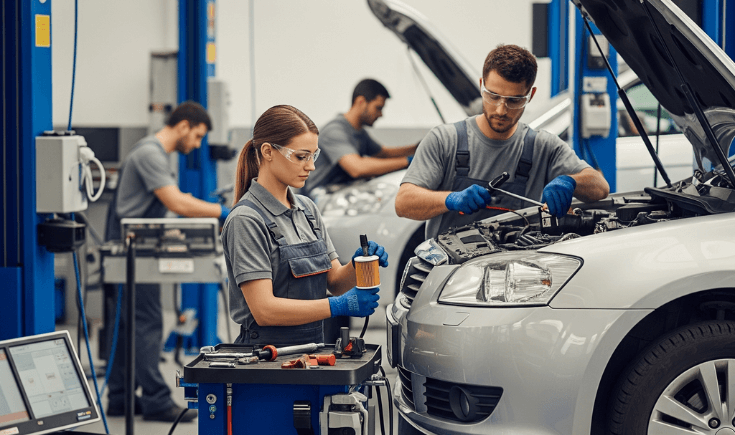
Keeping your car in top condition isn’t just about comfort-it’s about safety, reliability, and cost-saving in the long run. But one of the most common questions car owners ask is: “How often should I service my car, especially with the tough road conditions in India?” In this complete guide, we break down ideal car service intervals, what each service includes, and how Indian road and weather conditions affect your car’s maintenance needs
Recommended Car Service Intervals (General Rule of Thumb)
Most manufacturers suggest servicing your car every 10,000 km or once a year whichever comes first.For older vehicles or cars driven in harsh conditions, it’s safer to service every 6 months or 5,000 km to ensure optimal performance and prevent major issues.
How Indian Road Conditions Affect Service Frequency
1. Basic/Minor Service: Car servicing should ideally be done every 6 months or after covering 5,000-7,000 km, whichever comes first. A typical service includes an engine oil change, oil filter replacement, and top-ups for essential fluids such as coolant, windshield washer, and brake fluid. It also involves a thorough battery health check to ensure reliable performance and avoid unexpected breakdowns.
2. Interim Service: A comprehensive car service is recommended every 10,000-12,000 km to maintain optimal vehicle performance. This includes a full system diagnostic to detect any underlying issues, brake cleaning and adjustment for safety, and air filter cleaning or replacement to ensure proper engine airflow. Additionally, tyre rotation and alignment checks are carried out to promote even tyre wear and improve driving stability.
3. Major Service: An advanced car service is typically recommended every 20,000-30,000 km or once a year. This service includes spark plug and fuel filter replacement to maintain engine efficiency, along with AC filter replacement and a coolant flush to ensure effective cooling and air circulation. It also involves a complete car inspection and deep cleaning to keep your vehicle in top condition both mechanically and aesthetically.
4. DIY Checks Between Services: In India, it’s wise to perform a few simple DIY checks every month to keep your car running smoothly between services. Monitor the engine oil level and color to ensure proper lubrication, and check tyre pressure and tread for safe driving and fuel efficiency. Inspect the battery terminals for any signs of corrosion, which can affect performance, and make sure the windshield wipers and washer fluid are in good condition for clear visibility during rains or dusty conditions.
How to Choose the Right Service Center in Amravati, India
When choosing a service center, always look for manufacturer-authorized workshops to ensure quality and expertise. Ask for a detailed job card outlining all the work to be done, and confirm that genuine spare parts are being used for replacements. It’s also helpful to opt for service centers that offer convenient pickup and drop facilities, making the entire process hassle-free.
Final Thoughts
Regular car servicing in India isn’t just a recommendation-it’s essential. With the country’s unique mix of traffic, climate, and terrain, following a proper car maintenance schedule ensures your vehicle stays safe, fuel-efficient, and resale-ready. Pro Tip: Always refer to your car’s owner manual for brand-specific service intervals and keep a digital record of all your services.
Frequently Asked Questions (FAQs)
Q1. How do I know it's time to service my car?
A1:If your car hits 10,000 km or it’s been 12 months since your last service, it’s time. Other signs include engine noise, reduced mileage, brake issues, or warning lights on the dashboard.
Q2. Do Indian road conditions really affect how often I should service my car?
A2: Yes. India’s rough terrain, potholes, traffic congestion, and extreme weather (especially monsoons and heatwaves) put more stress on your vehicle. This means frequent oil changes, brake checks, and suspension inspections are crucial.
Q3. Can I skip a minor service if my car feels fine?
Not recommended. Minor services include oil and fluid checks that prevent long-term engine damage. Skipping them can lead to costly repairs later even if your car "feels" fine now.
Q4.What happens if I delay a major service?
A4: Delaying major services can result in poor engine performance, higher fuel consumption, and even breakdowns. Parts like spark plugs and fuel filters wear out and need timely replacement to keep your car running smoothly.
