
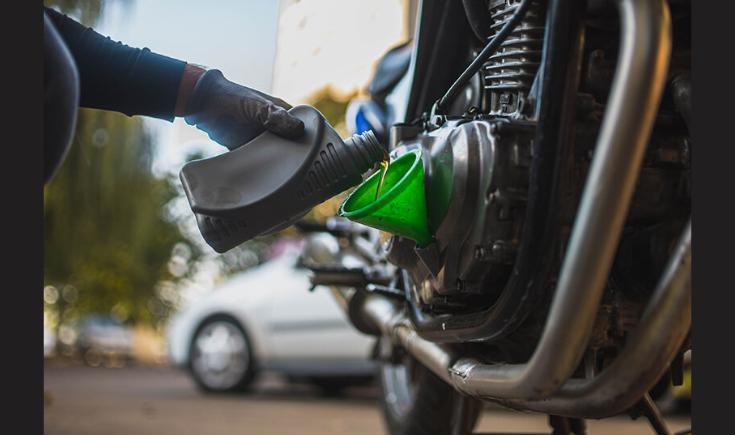
Why Engine Oil Matters
Engine oil is the lifeblood of your two-wheeler. It lubricates the engine components, reduces friction, cools the engine, and prevents the buildup of harmful deposits. Without clean and appropriate engine oil, your bike or scooter could face severe performance issues, reduced mileage, or even engine damage.
Types of Engine Oil for Bikes and Scooters
1. Mineral Oil : Derived directly from crude oil, mineral oil is the most basic and affordable option. It's ideal for older bikes or for riders who use their two-wheeler occasionally for short distances. However, it requires more frequent oil changes.
2. Semi-Synthetic Oil : A blend of mineral and synthetic oils, this type offers a good balance between performance and cost. It provides better engine protection and lasts longer than pure mineral oil.
3. Synthetic Oil Fully synthetic oil is engineered for high performance and durability. It’s perfect for modern, high-powered bikes and scooters, especially those used for long-distance commuting or in extreme conditions. Although more expensive, it offers extended oil change intervals and superior engine protection.
How to Choose the Right Engine Oil for Your Bike or Scooter
When choosing the right engine oil for your two-wheeler, start by checking your owner's manual it specifies the recommended oil grade (such as 10W30 or 20W40) and type suitable for your vehicle. Your riding style also plays a key role: if you frequently ride long distances or commute at high speeds, synthetic oil is a better choice due to its superior heat resistance and lubrication. For casual city riders, semi-synthetic or mineral oil may be sufficient. Additionally, consider the climate hotter regions like Amravati benefit from oils that can withstand higher temperatures, such as the 20W40 grade. Lastly, the type of engine matters; modern four-stroke engines typically perform best with semi or fully synthetic oils.
Use the Right Engine Oil
Using incorrect or low-quality engine oil increases engine friction, reducing efficiency. Tip: Always use manufacturer-recommended engine oil. Our expert technicians at Hassonjee Automotives ensure the correct grade is used every time.
Understanding Oil Change Intervals
Timely oil changes are essential for maintaining optimal performance and prolonging engine life. The frequency of oil changes depends on the type of oil used: mineral oil should be changed every 2,000 to 2,500 km, semi-synthetic oil every 3,000 to 5,000 km, and synthetic oil every 7,000 to 10,000 km. However, these intervals can vary based on external factors such as weather, road conditions, and riding habits. It's important to regularly monitor the oil level and quality using the dipstick or sight glass to ensure your engine remains in good condition.
Why choose Hassonjee Automotives for oil changes in Amravati?
At Hassonjee Automotives, we specialize in two-wheeler maintenance, offering expert oil change services tailored to your bike’s specific make and model whether it's a Hero, Honda, TVS, Bajaj, Suzuki, Yamaha, or Royal Enfield. Our certified technicians use only top-quality brands and ensure accurate oil selection, proper draining and refilling, and the use of genuine filters and lubricants. We pride ourselves on delivering quick, affordable service without compromising on quality. Conveniently located in the heart of Amravati, we’ve earned a reputation as a trusted name in bike and scooter servicing, thanks to our customer-first approach and unmatched technical expertise.
Frequently Asked Questions (FAQs)
Q1: What's the biggest difference between synthetic, semi-synthetic, and mineral engine oil for my bike?
A1: The main difference lies in their composition and performance. Mineral oil is the most basic, derived directly from crude oil, and is ideal for older bikes or occasional use. It requires more frequent changes. Semi-synthetic oil is a blend of mineral and synthetic, offering a good balance of performance and cost with longer change intervals.
Q2: How often should I really change my bike's engine oil in Amravati's climate?
A2: While general guidelines exist (2,000-2,500 km for mineral, 3,000-5,000 km for semi-synthetic, and 7,000-10,000 km for synthetic), Amravati's hotter climate can put more stress on your engine oil. It's always best to refer to your owner's manual. However, given the local conditions, it's often wise to err on the side of changing it slightly more frequently than the absolute maximum recommended interval, especially if you ride frequently or in heavy traffic.
Q3: My owner's manual recommends 10W30, but my friend says 20W40 is better for my scooter. What should I do?
Always prioritize your owner's manual's recommendation for the specific oil grade (like 10W30 or 20W40). This is the grade your vehicle's engine was designed to operate with. While a 20W40 might be generally effective in hotter regions, sticking to the manufacturer's specified grade ensures optimal lubrication and engine performance for your specific model
Q4: Is it true that using synthetic oil will significantly extend my bike's engine life?
A5: Yes, fully synthetic oil is engineered for superior performance and protection. It provides better lubrication, resists breakdown at higher temperatures, and creates fewer deposits compared to mineral oil.
